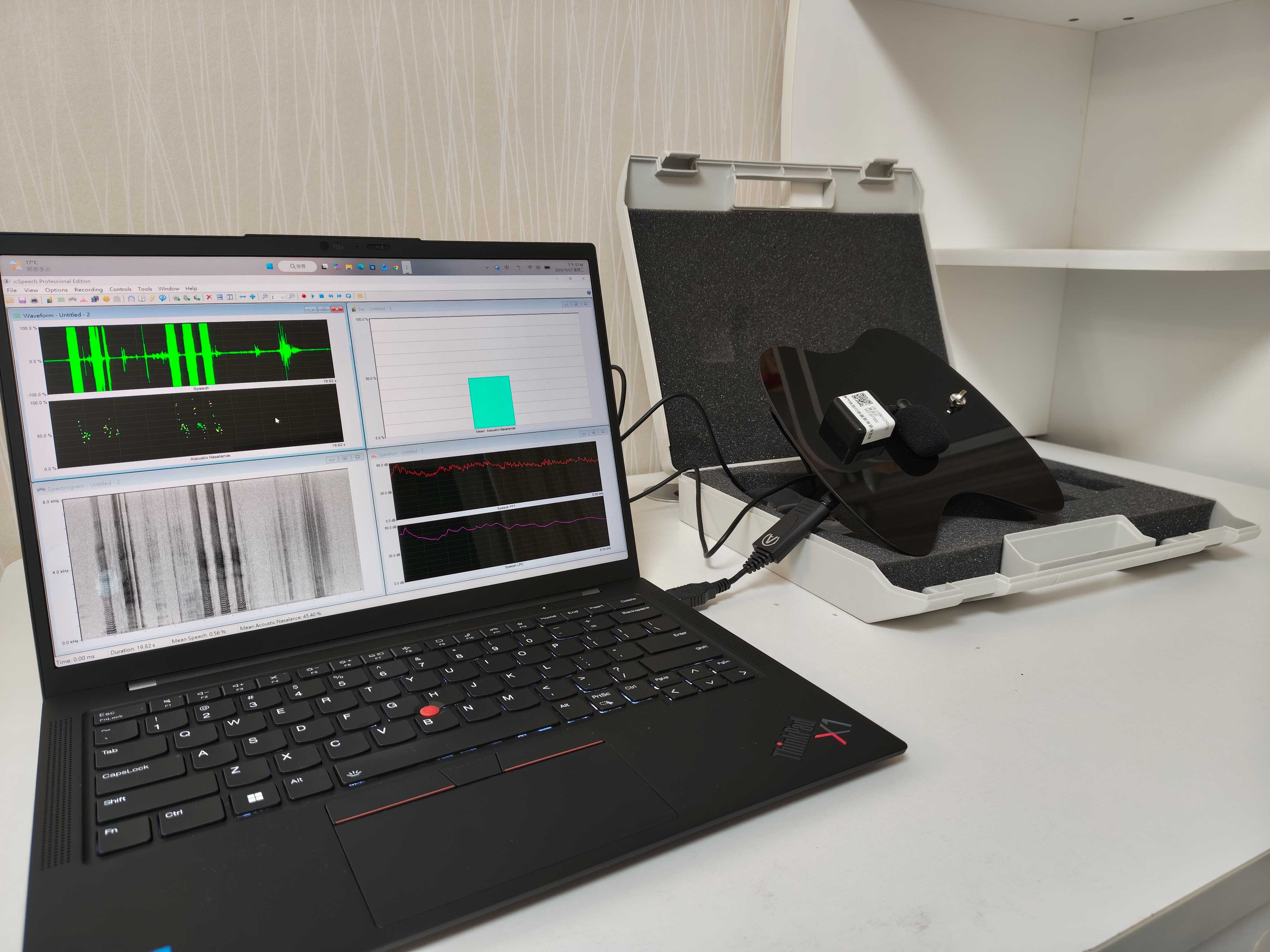
The Rose Medical Portable Nasometry Unit is a state-of-the-art diagnostic and analytical tool designed to measure and assess nasal resonance in speech production.It plays an essential role in assessing and improving speech production by quantifying hypernasality (excessive nasal resonance) or hyponasality (insufficient nasal resonance). In speech therapy, the device is commonly used to evaluate and treat resonance disorders, such as those caused by cleft palate, velopharyngeal dysfunction, or other speech impairments. Its ability to provide objective, real-time feedback helps therapists design targeted interventions and track progress effectively. In pronunciation training, particularly for students learning foreign languages, the Nasometry Unit is a powerful tool for refining pronunciation. By identifying and correcting nasalization errors, it ensures greater intelligibility and accuracy, which is especially critical in languages with nasal phonemes, such as Spanish or Portuguese. For linguistic research, the device provides valuable data on nasal resonance patterns, cross-linguistic nasality variations, and the acoustic properties of nasal sounds. This data contributes to a deeper understanding of phonetics, phonology, and second language acquisition. In educational contexts, particularly in university programs, the Nasometry Unit enhances student learning by providing a hands-on, practical understanding of speech acoustics, bridging the gap between theoretical knowledge and real-world application.
Accurate pronunciation is a fundamental requirement for effective communication in foreign languages, and the Nasometry Unit provides students with objective, real-time feedback on their nasal resonance. This enables them to make precise adjustments to their speech. The device also supports speech therapy for multilingual speakers who may experience resonance issues when transitioning between languages with different phonetic systems. This ensures that students and individuals with speech impairments receive tailored interventions to improve their clarity and confidence in communication. Additionally, the unit advances linguistic research by enabling scholars to investigate nasality patterns across languages, regions, and speakers. Such research not only informs theoretical understanding but also enhances teaching methodologies for foreign language learners. Overall, the device promotes inclusive learning by supporting students with diverse needs, aligning with the broader mission of equitable access to education.